The Mock Orange next to the house is in full bloom and the bees have found it, though not in the numbers they used to. In the past, I would hear the bees before seeing them. Still, it’s always a pleasure to watch them industriously flitting from flower to flower, collecting pollen and nectar.
Posted for Terri’s Flower Hour. See more responses here.
The idea of The Numbers Game is to enter a number into the search bar of your computer and then post a selection of the photos that turn up. This week’s number is 747. Captions are on the photos. You can see more responses here.
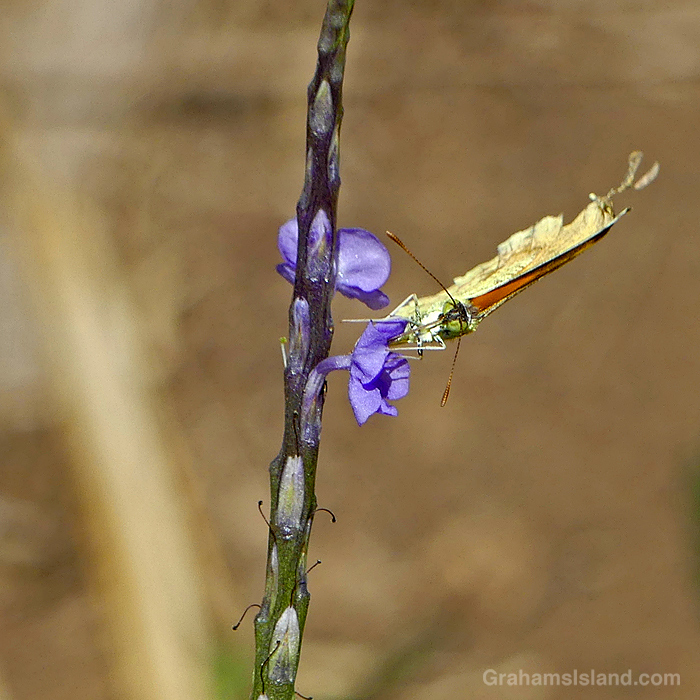
A baby gecko in a bad place.A Coel. assamica orchid.Looking down on a Cordyline.The caterpillar of a Passion Vine Butterfly and a passing fly.Lesser Grass-blue Butterflies.A Pueo on the wing.
This week’s Sunday Stills challenge theme is ‘Wild Animal or Bird of the Month.’ See more responses here.
Pu’u O’o Trail is a few miles east of the saddle between Mauna Loa and Mauna Kea, on the south side of the main cross-island highway. It’s all above 5,000 feet and can be cold, wet, and windy, but I’ve had good luck picking warm, sunny days. These photos are from a couple of recent hikes I took up there. Captions on the photos.
The trail enters a kīpuka.There are open, grassy areas.A view of Mauna Kea.
The trail crosses old lava flows from Mauna Loa, but there are kīpukas, areas of old-growth forest missed by the lava, which are home to several kinds of native birds.
An ‘Apapane.An ‘Io, the native Hawaiian hawk, glides overhead.An Hawaii ‘Amakihi.
On my last visit, I was lucky enough to see an ‘Akiapola’au, an endangered native species, which is only found on this island these days. This one was high up in the trees with the sun behind it. While my photos weren’t great, I was still able to see this industrious bird foraging for a meal. The shorter lower mandible is used to drill into branches and then the curved upper mandible digs out the grubs hiding within.
An ‘Akiapola’au.
These native birds make this trail popular with birders, but it’s a good hike for anyone. A 9-mile loop is possible, but I usually do an out-and-back hike through the first two or three kipukas, which totals about five miles.
Hāpu’u tree ferns (Cibotium menziesii) grow alongside the trail.The trail winds through a kīpuka.Not flowers, but new leaves on Kōlea lau nui (Myrsine lessertiana).It’s cool and wet enough for moss to take over.
Also posted for Jo’s Monday Walk. See more responses here.
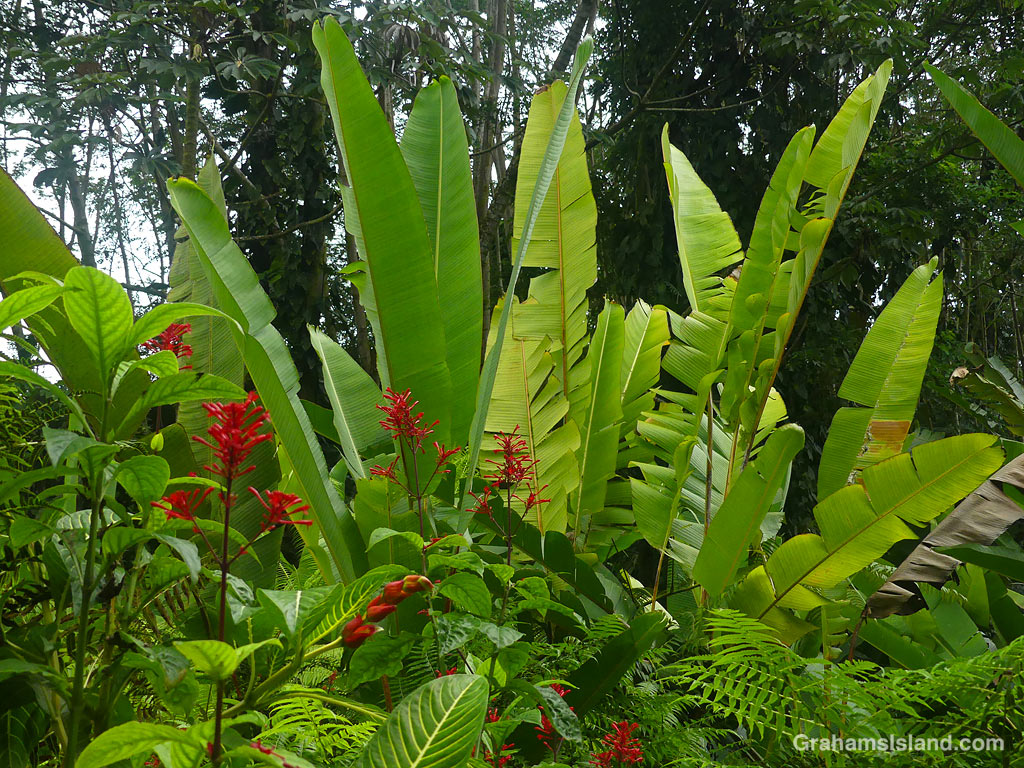
Heliconia rostrata is better known as the Hanging Lobster Claw Heliconia. I was trying to remember where I’d seen this and remembered it was in front of a neighbor’s house!
Posted for Terri’s Flower Hour. See more responses here.